


The main types of stone masonry include rubble masonry and ashlar masonry, with several variations based on stone shape, dressing, arrangement, and jointing. Stone masonry uses natural stones as the primary masonry units and can provide durable construction when suitable materials and workmanship are used.
The method selected affects appearance, construction time, material requirements, labour, and structural performance. Random rubble masonry may suit applications where regularity is less important, while ashlar masonry uses more carefully dressed stones for a uniform finish. This guide explains the major types of stone masonry, their characteristics, applications, advantages, limitations, and selection factors.
Quick Answer
Types of stone masonry are broadly divided into rubble masonry and ashlar masonry. Rubble masonry uses stones that are generally less regularly shaped, while ashlar masonry uses carefully dressed stones with more uniform faces and joints. Common forms include random rubble, coursed rubble, dry rubble, polygonal rubble, and several ashlar variations. The suitable method depends on structural requirements, stone availability, workmanship, appearance, and project conditions.
What is Stone Masonry?
Stone masonry is a building construction technique that uses stones and mortar. This technique is used for home foundations, floors, retaining walls, arch designs, and columns. The stones used for masonry construction are natural rocks.
Materials Used for Stone Masonry
The following are the materials used for stone masonry:
Stones
The stones used in masonry construction are not just any rocks. They must be hard, tough, and free from sand holes, cracks, and cavities. The choice of stone for a project and different types of stone masonry is influenced by its availability and the structure’s requirements. Common types of stones used in stone masonry include limestone, sandstone, granite, marble, and laterite. Usually these types of stones are used to construct walls, stairs, columns, floors, etc.
Mortar
The mortar is the binding material utilised for masonry construction. Cement and sand with water form the mix for masonry mortar. This mortar mix should be uniform. The following are two key factors influencing the selection of mortar for the different types of stone masonry:
- Required strength
- Stone colour
- Intended various types of loads on the structure
Different Types of Stone Masonry
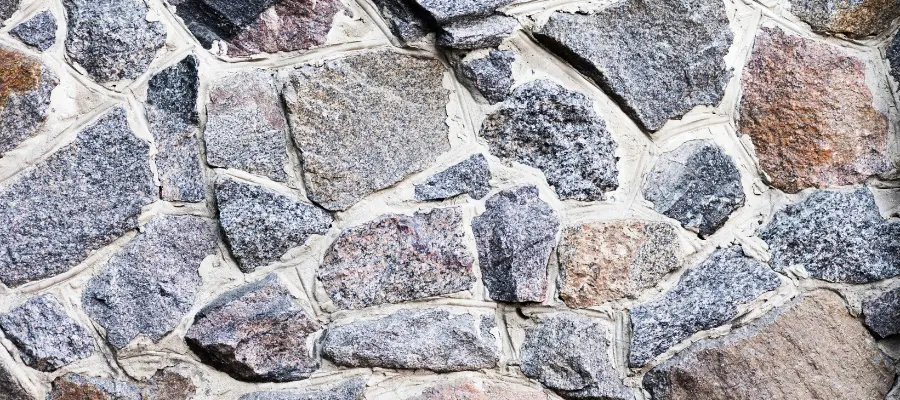
Stones are abundant in nature, and when cut and polished to proper shapes, they offer an economical construction material for various parts of the building. Stone masonry can be classed according to the thickness of joints, course continuity, and face finish. The following are types of stone masonry:
1. Rubble Stone Masonry
2. Ashlar Masonry
1. Rubble Stone Masonry
In rubble stone masonry, irregular stones are used with mortar to form the masonry. This masonry is indicated by its wide joints, which result from utilising stones of varying sizes.
The rubble masonry is again classified based on the shape of the stones used as follows:
- Uncoursed Random Rubble Masonry
- Coursed Rubble Masonry
- Polygonal Masonry
- Flint Masonry
- Dry Rubble Masonry
1. Uncoursed Random Rubble
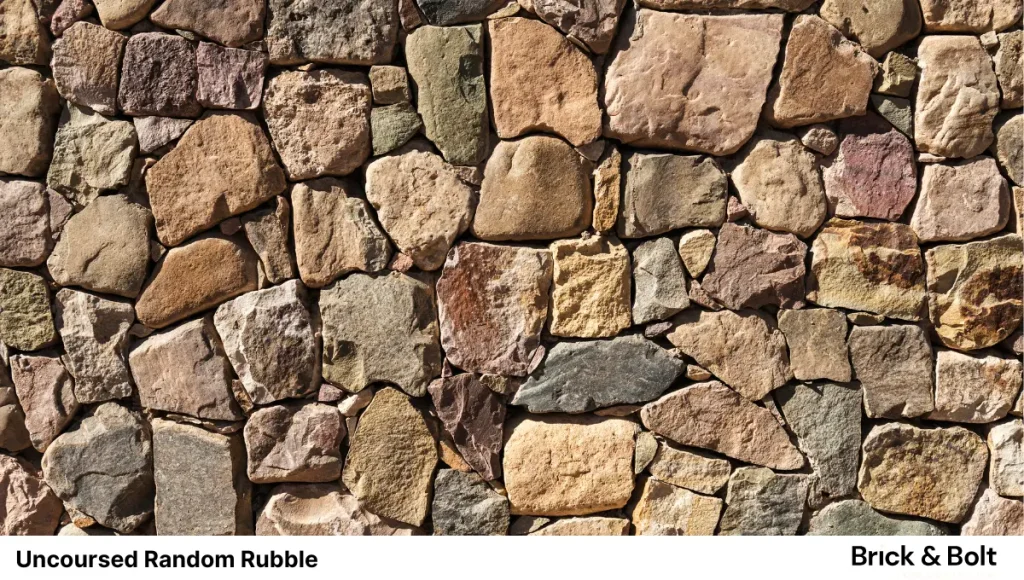
Uncoursed random rubble masonry refers to the use of the stones that are not treated in any way. It can involve highly contrasting sizes and irregular shapes. Hence, careful placement is required to ensure even pressure distribution across a wider surface area. Some large stones are used in specific positions to make the structure stronger. Each stone is positioned differently, giving the finished structure a unique look.
2. Coursed Rubble Masonry
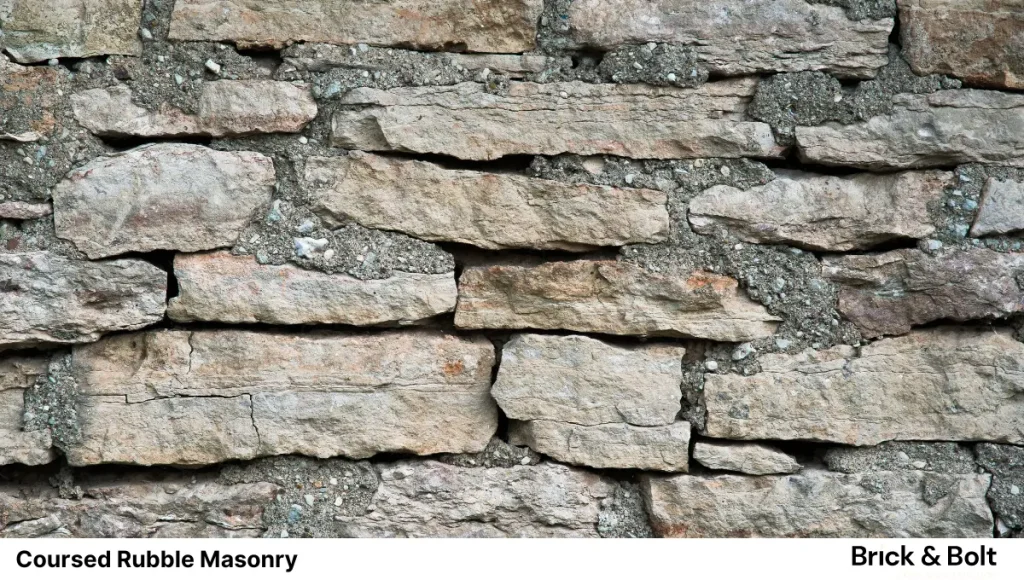
This is the simplest and most affordable way of building a stone wall. Coursed rubble masonry involves stones of any size between 50 and 200 mm. This stone masonry has regular square rubble masonry, This stone masonry method is usually used in churches, schools, and hospitals.
3. Polygonal Rubble Masonry
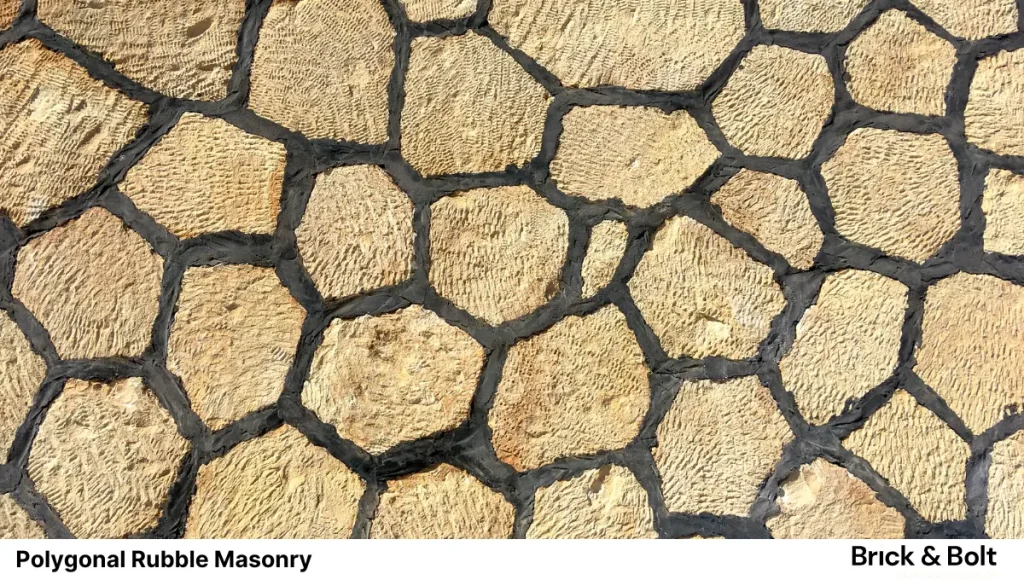
Polygonal rubble masonry uses stones with multiple sides that are irregular in shape and size. These stones are cut into multi-sided figures, creating distinct patterns on the structure, which enhances its aesthetic uniqueness.
4. Flint Rubble Masonry
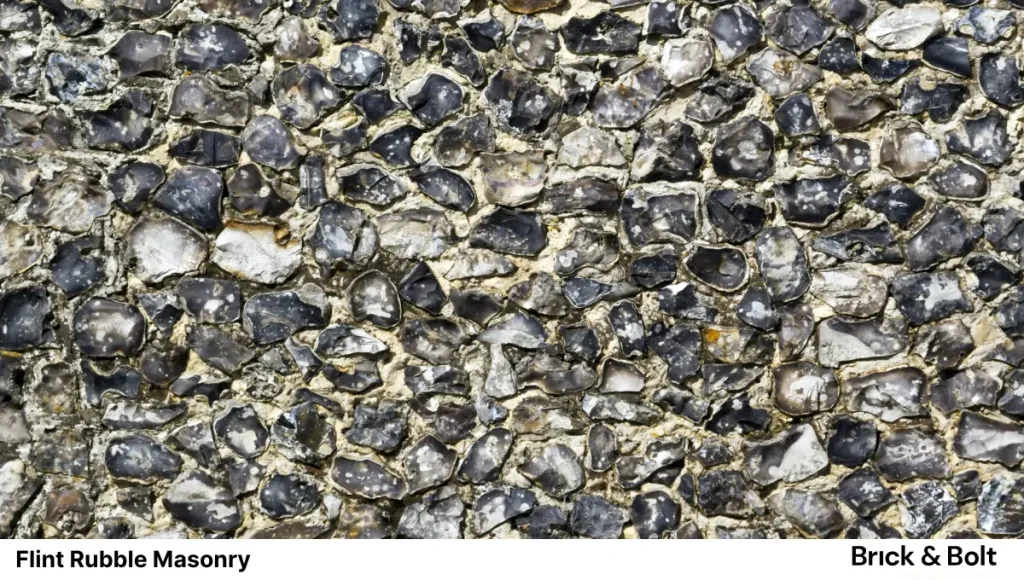
Flint rubble masonry uses flint or cobbles, a very hard and durable type of stone. This stone is known for its strength and is suitable for constructing durable structures. Flint is used with a varied width and thickness from 7.5 cm to 15 cm and length from 15 cm to 30cm. Flint rubble masonry is quite prevalent in regions where flint is readily available.
5. Dry Rubble Masonry
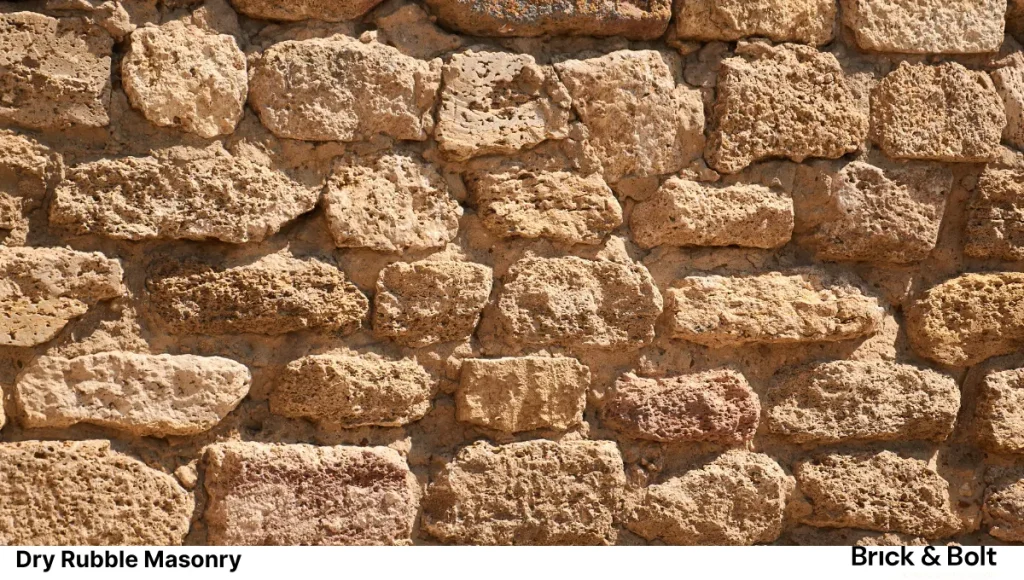
These are rubble masonry structures constructed without the use of mortar. Smaller stones are used to fill narrow gaps. They are used to pitch earthen dams and canal slopes.
2. Ashlar Masonry
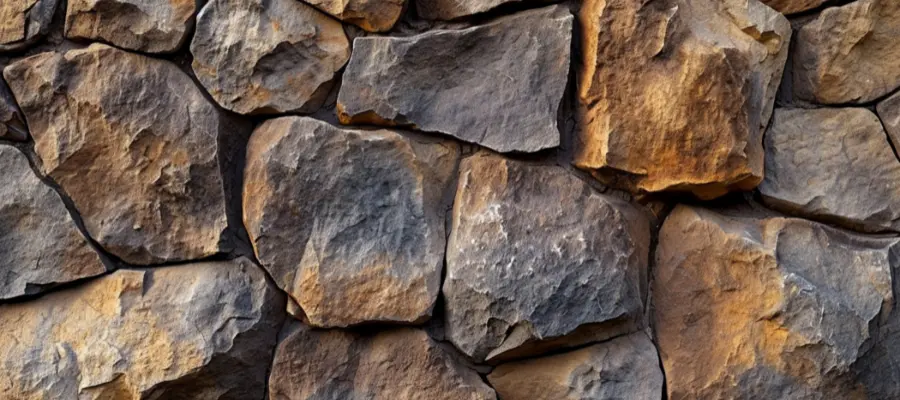
Ashlar Masonry utilises stone blocks that are either square or rectangular in shape. Some of the courses are lower than others, and the stones are between 250 and 300 mm high. Since it costs more, ashlar masonry is used only for the outside face of a wall.
Based on the types of polishing used to smooth the surface, they are categorised as follows:
- Ashlar Fine Masonry
- Ashlar Rough Masonry
- Rock and Quarry Faced Masonry
- Ashlar Block in Course Masonry
- Ashlar Chamfered Masonry
1. Ashlar Fine Masonry
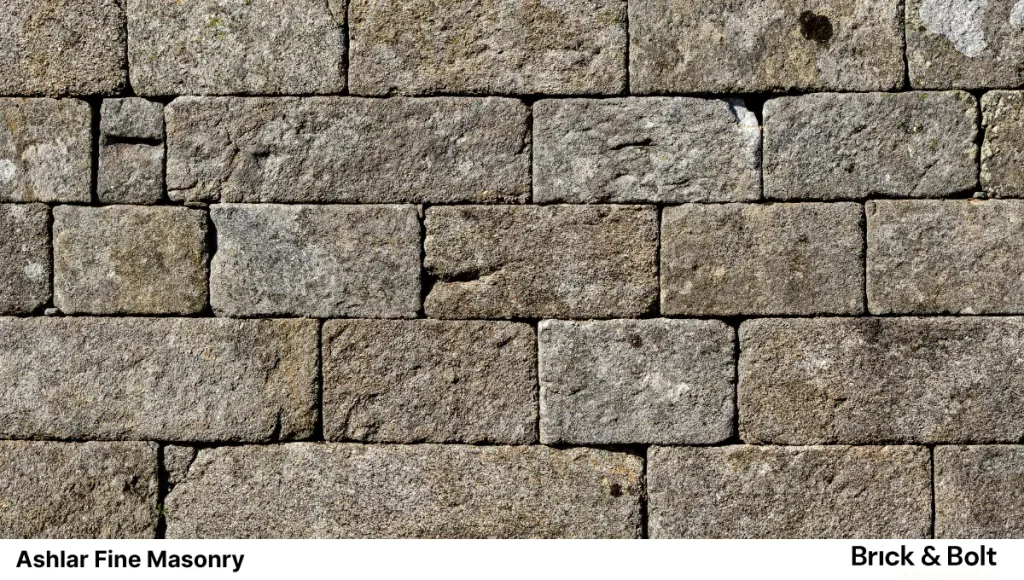
In ashlar fine masonry building, each stone is cut to a regular size and shape, almost rectangular in shape. This design enables ideal horizontal and vertical connections with the adjacent stones. Ashlar fine masonry construction is quite expensive.
2. Ashlar Rough Masonry
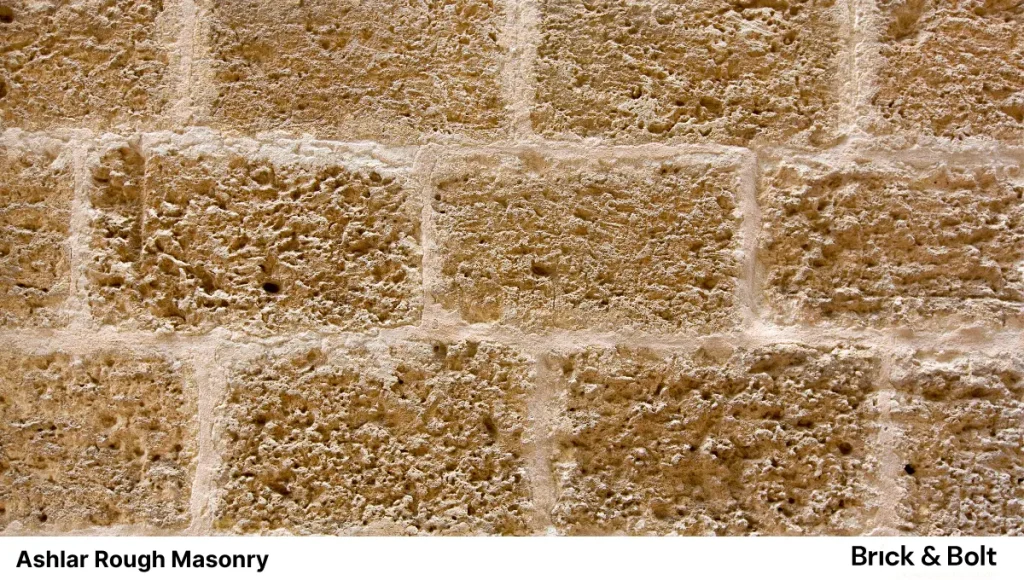
Ashlar Rough Masonry preserves some of the natural textures and intricacies on the stone’s face while keeping the precision of square or rectangular shapes. This creates a unique combination of rough, natural appeal with the accuracy of squared corners, resulting in a more rustic yet organised appearance.
3. Rock or Quarry Faced Masonry
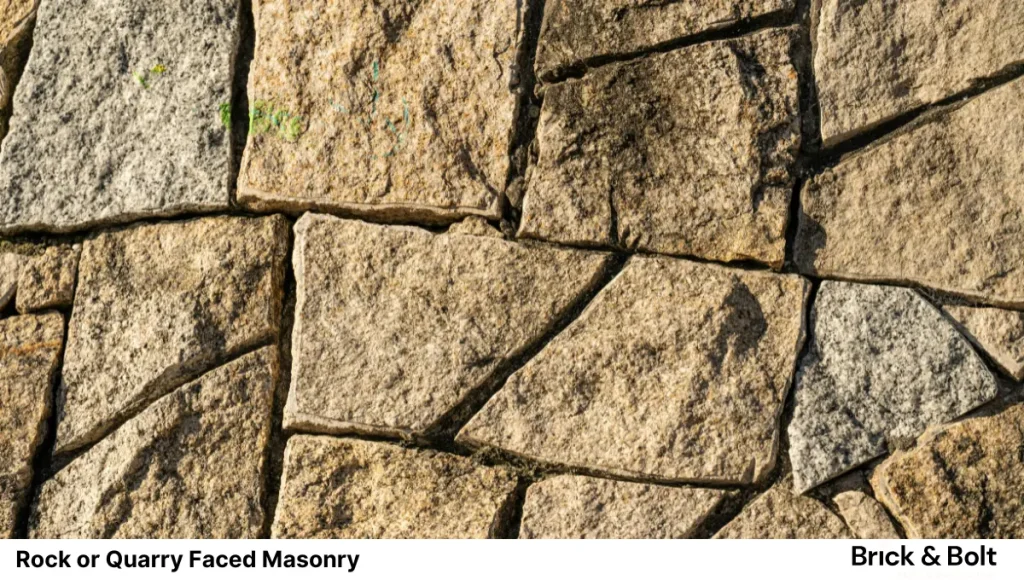
The Rock-faced or Quarry-faced masonry technique is a subset of Ashlar masonry. The stones have finely cut edges, but their faces are left in their natural state as they emerge from the quarry. This process keeps the natural texture on the face of the stones, providing an appealing contrast to the carefully cut edges.
4. Ashlar Block in Course Masonry
Ashlar block in course masonry combines both ashlar and rubble masonry techniques. The front face of the wall has rough or hammered stone surfaces that form a pattern, while the back wall is built with rubble masonry. This creates a fascinating aesthetic contrast because the irregularity of the rubble-stone back is balanced by the prominent, ordered front face.
5. Ashlar Chamfered Masonry
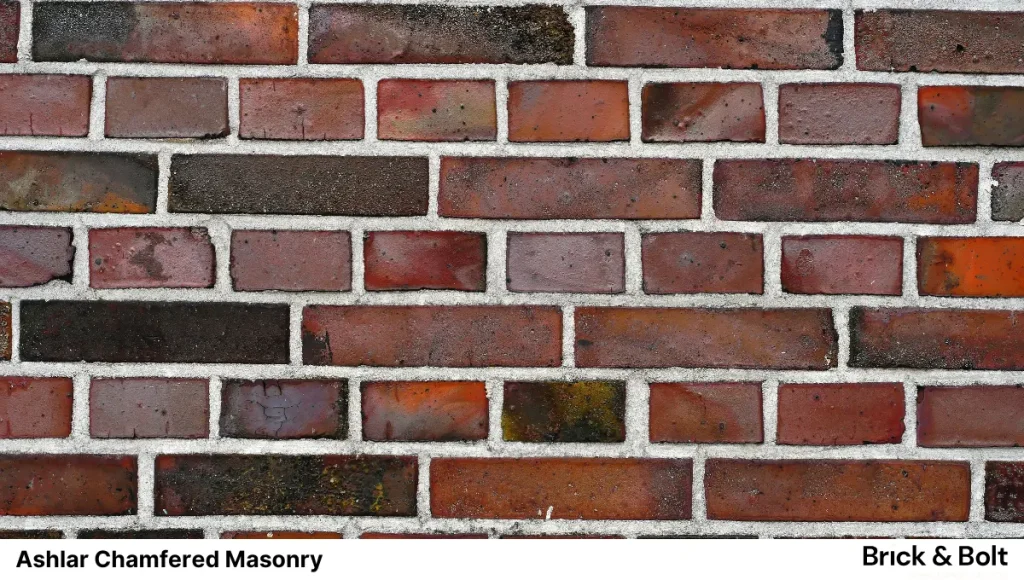
This kind of masonry follows the traditional ashlar masonry principles, with stone blocks cut into precise shapes. Yet, in this form of stone construction, the edges are bevelled or chamfered rather than sharp and straight. This means the edges are cut at an angle, resulting in a sloping look. This not only improves the structure’s visual attractiveness but also increases architectural durability because chamfered edges are less susceptible to harm from external sources over time.
You can also read more about plum concrete, another popular building material, including its benefits, preparation, and applications.
Conclusion
The different types of stone masonry offer practical options for structural, architectural, boundary, retaining, landscaping, and traditional construction. Rubble masonry generally uses less regularly shaped stones, while ashlar masonry provides more precise courses and finishes through greater stone dressing. The right choice depends on structural requirements, stone availability, appearance, labour, budget, climate, and workmanship. For structural or retaining applications, the masonry system should be selected and detailed according to the project’s engineering requirements rather than appearance or material availability alone.
FAQs
- What are the main types of stone masonry?
The main types of stone masonry are rubble masonry and ashlar masonry. Rubble masonry includes random, coursed, uncoursed, polygonal, and dry rubble forms. Ashlar masonry includes fine, rough-tooled, rock-faced, and block-in-course variations. The classification mainly depends on how the stones are shaped, dressed, arranged, and jointed.
- What is rubble masonry?
Rubble masonry uses stones that are irregular or only roughly dressed. The stones vary in size and shape and are arranged to form a stable wall, often using mortar. Random rubble and coursed rubble are common forms. It is often selected for applications where a natural appearance and relatively simple stone preparation are suitable.
- What is ashlar masonry?
Ashlar masonry uses stones that are carefully dressed to create relatively regular faces, courses, and joints. It generally requires more stone preparation and skilled labour than rubble masonry. Ashlar can provide a precise, refined appearance and is often selected when architectural finish and regular masonry lines are important.
- What is the difference between rubble masonry and ashlar masonry?
The main difference is the degree of stone dressing and regularity. Rubble masonry generally uses irregular or roughly shaped stones, while ashlar masonry uses more accurately dressed stones with regular faces and joints. Ashlar therefore usually requires more preparation and skilled workmanship, while rubble masonry can provide a more natural and irregular appearance.
- Which type of stone masonry is most economical?
Rubble masonry is generally more economical than highly dressed ashlar masonry because the stones require less shaping and finishing. However, actual cost depends on local stone availability, transportation, labour rates, wall thickness, mortar requirements, and construction complexity. A complete project estimate should consider all these factors rather than stone purchase price alone.
- Is dry rubble masonry constructed without mortar?
Yes, dry rubble masonry is constructed without conventional mortar joints. The stones are carefully selected and positioned so that their weight, shape, and interlocking provide stability. It is suitable only for applications where a mortar-free stone arrangement is appropriate and properly designed. Construction quality and stone placement are particularly important.
- Where is stone masonry commonly used?
Stone masonry is used for foundations, boundary walls, retaining walls, external walls, landscaping features, traditional buildings, and selected structural applications. The appropriate masonry type depends on the purpose of the wall, loading conditions, soil, drainage, environmental exposure, appearance, available stone, and applicable structural requirements.
- How do I choose the right type of stone masonry?
Choose the masonry type based on structural requirements, desired appearance, stone availability, budget, climate, labour skills, and construction conditions. Rubble masonry may suit irregular natural finishes, while ashlar is appropriate when regular courses and precise joints are required. Structural and retaining walls should be designed according to engineering requirements before selecting the masonry technique.
 Sowjanya Siddanoor